

Rajat Khare Cleantech: Water Management and Marine Sustainability Innovation
Rajat Khare Cleantech
Water pollution is an environmental challenge that affects marine ecosystems, coastal areas, and communities that depend on clean water resources. Addressing this issue requires more than awareness. It also requires practical approaches to waste collection, water management, and environmental technology. The subject of Rajat Khare Cleantech is relevant to this discussion because Boundary Holding has been associated with investment in companies working on water management and marine waste collection technology.
Clean technology can contribute to environmental efforts through solutions designed to address specific problems. In the water-management sector, these solutions include technologies for collecting waste from waterways, supporting recycling, and gathering information about the marine environment.

Two articles provide useful background on this investment area. A November 2022 article published by NetNewsLedger discusses Boundary Holding's focus on companies working in water management. A June 2024 article in The European Business Review examines marine waste collection technology and the role of clean-tech investment.
Together, these sources offer a view of how technology development and investment can be connected with efforts to improve aquatic environments.
Understanding the Water Pollution Challenge
Water pollution is a complex issue because waste can enter rivers, lakes, coastal areas, and oceans through several routes. The NetNewsLedger article, Boundary Holding focuses more on investing in companies working in water management, published on 16 November 2022, discusses the accumulation of waste in water bodies and its possible effects on marine life, human health, and infrastructure.
The article identifies several sources of water pollution. These include waste released from coastal dumpsites, littering on beaches, tourism and recreational activities, fishing-related waste, and ship-breaking activities. It also describes how storms and floods can carry waste from land into the sea. Once waste reaches marine environments, it may sink, move through ocean currents, or accumulate along coastal areas.
This makes water pollution a challenge that requires attention to both its sources and its movement through the environment.
The article also highlights concerns about plastic waste, contaminated food sources, and the impact of pollution on marine biodiversity. These issues demonstrate why water management is an important part of wider environmental discussions.
Why Water Management Needs Practical Solutions
Awareness is an important starting point, but it cannot address the entire problem of water pollution. This includes considering the different types of waste found in aquatic environments and the locations where waste accumulates. Some areas may contain concentrated waste that is difficult to reach. Other waterways may require broader collection efforts. A single approach may not be suitable for every location.
Technology companies working in this sector are therefore exploring different methods of collecting waste and supporting environmental management. For clean-tech businesses, the challenge is to develop solutions that can address practical requirements in real operating environments.
This is also where investment becomes relevant. Developing products, conducting research, expanding teams, and building customer relationships all require resources.
Marine Waste Collection Technology
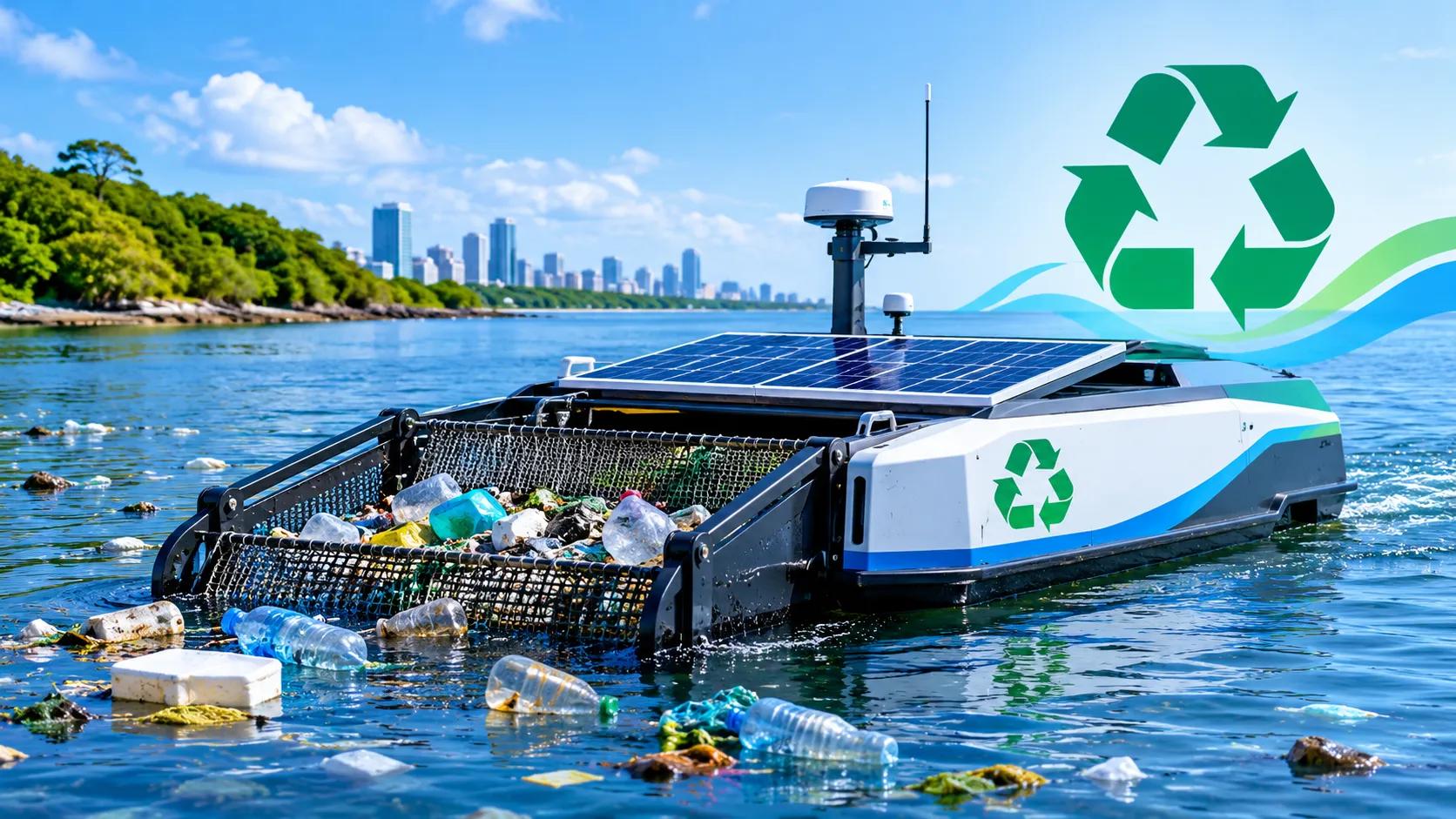
Marine waste collection is one example of how technology can be applied to water-management challenges. The NetNewsLedger article discusses companies developing remote-controlled and autonomous marine systems designed to move through water and collect unwanted material. These systems can be used in locations such as ports, harbours, and marinas. The article describes their ability to extract waste and gather information about the surrounding marine environment.
Collecting waste and gathering environmental data are two connected activities. Waste collection addresses visible material in the water, while information about the marine environment can help organisations understand the conditions in which they operate. The article also explains the importance of reaching smaller, difficult-to-access waste accumulation areas while being able to cover larger sections of waterways.
It identifies the potential for multiple autonomous units to be deployed in areas with higher concentrations of waste. This approach is discussed in the context of scaling collection activity and making clean-up operations more efficient. These examples show how marine technology can contribute to practical water-management efforts.
The Role of Autonomous Systems in Waterways
Autonomous and remotely controlled marine systems represent one area of innovation within clean technology. Unlike conventional approaches that rely entirely on manual collection, these systems are designed to operate in water and collect unwanted material through specialised equipment.
The NetNewsLedger article describes marine drones that can move through waterways, extract waste, and collect data about their environment. Their use in ports, harbours, and marinas is relevant because these locations may contain areas where waste accumulates.
The article also discusses the possibility of using multiple units to address higher-density waste areas. The idea is to increase collection capacity by deploying systems where they are needed. However, the effectiveness of any technology depends on its design and the environment in which it is used. Different locations may have different waste conditions and operational requirements.
The important point is that autonomous marine systems provide one technological approach to the wider challenge of water pollution.
Marine Sustainability and Electrically Operated Technology
The European Business Review article provides another example of marine waste collection technology. In Ranmarine's marine trash-collection catamaran and sustainability initiatives, published on 7 June 2024, the publication discusses a Netherlands-based marine waste collection company and its electrically operated autonomous surface vessel. The article describes the vessel as being designed for targeted waste removal in challenging environments, including confined areas where debris can accumulate.
It also reports that the electric system can operate for up to eight hours without direct emissions during operation. This is presented in comparison with traditional diesel- or petrol-powered boats. The article discusses how electrically operated technology can support waste collection while reducing emissions associated with conventional fuel-powered operation.
It also identifies the company as an example of a business working on commercially available autonomous surface-vessel technology for marine cleaning. This example illustrates how clean-tech innovation can combine waste collection with developments in electric operation and autonomous systems.
Boundary Holding's Interest in Water Management
Investment can support the development of technology companies by providing resources for research, product development, and business expansion. The NetNewsLedger article connects Boundary Holding with investment in companies working in water management. It specifically discusses investment in a Netherlands-based marine waste collection company.
According to the article, the investment was intended to support research and development for upcoming products, data, and a customer portal. It also refers to team expansion, business development, and participation in trade shows for market growth. These details show that investment in a clean-tech company can support several parts of its development process.
Research and development can help a company work on future products. Data and customer tools can support its business activities. Team expansion and business development can help the company work towards broader commercial opportunities.
The article therefore presents water management as an area of interest within Boundary Holding's clean-tech investment activity.
Rajat Khare and the Importance of Clean-Tech Investment
The European Business Review article identifies Rajat Khare as a venture capitalist and founder of Boundary Holding. It discusses his perspective on marine waste collection technology and the potential of businesses working in this area. This investment perspective is relevant because environmental technology companies often need more than an initial idea. They require development resources and opportunities to establish their products in the market.
The NetNewsLedger article also highlights the role of investment in supporting research and development, team growth, and business development for a marine clean-tech company. Together, the articles show the connection between investment and technology development in the water-management sector.
The wider point is that clean-tech investment can support companies working on specific environmental challenges. In this case, the focus is on waste collection in aquatic environments and technologies designed to support cleaner waterways.
Connecting Water Management with Sustainability
Water management and marine sustainability are closely connected because the condition of aquatic environments is influenced by how waste is handled. The sources discuss different parts of this challenge. NetNewsLedger focuses on the sources and consequences of water pollution, along with the need for practical waste-management approaches. The European Business Review article focuses on marine waste collection technology and the role of autonomous, electrically operated systems.
Together, these perspectives show why technological solutions are an important part of the clean-tech conversation. They also highlight that environmental challenges can create opportunities for specialised companies to develop practical products and services.
For investors, the sector requires an understanding of both the environmental problem and the business model of the company working to address it.
Conclusion
Water pollution remains a complex challenge involving waste accumulation, marine ecosystems, and the condition of waterways. Addressing it requires practical approaches that combine waste collection, water management, and technology development. The NetNewsLedger and European Business Review articles provide examples of how marine waste collection companies are working in this area through remote-controlled and autonomous systems.
They also explain the role of investment in supporting research, product development, and business expansion. The connection between Rajat Khare, Boundary Holding, and water-management investment highlights the place of clean technology within the wider deep-tech investment landscape.
As companies continue to develop technologies for aquatic environments, water management and marine sustainability remain important areas for innovation and investment.