

Artificial intelligence
Artificial intelligence is becoming an important part of India's technology ecosystem, influencing how businesses analyse information, improve operations, and develop new products. From data-driven decision-making to predictive systems, AI is creating opportunities for startups to address practical challenges across industries. In this changing environment, Rajat Khare AI is a relevant topic for examining the relationship between technology investment, AI-driven businesses, and the development of emerging solutions. Through Boundary Holding, Rajat Khare is associated with investment in technology-focused companies and sectors that include artificial intelligence, data analytics, machine learning, and predictive analytics.

The Growing Role of Artificial Intelligence in India
India's AI ecosystem is developing through a combination of software companies, research institutions, startups, established businesses, and technology professionals. Organisations are exploring how AI can help them process large amounts of information, identify patterns, automate selected tasks, and make better-informed decisions.
Unlike conventional software that follows predefined instructions, AI systems can use data and computational models to identify patterns or generate predictions. The usefulness of these systems depends on factors such as data quality, model performance, suitable infrastructure, and the problem being addressed.
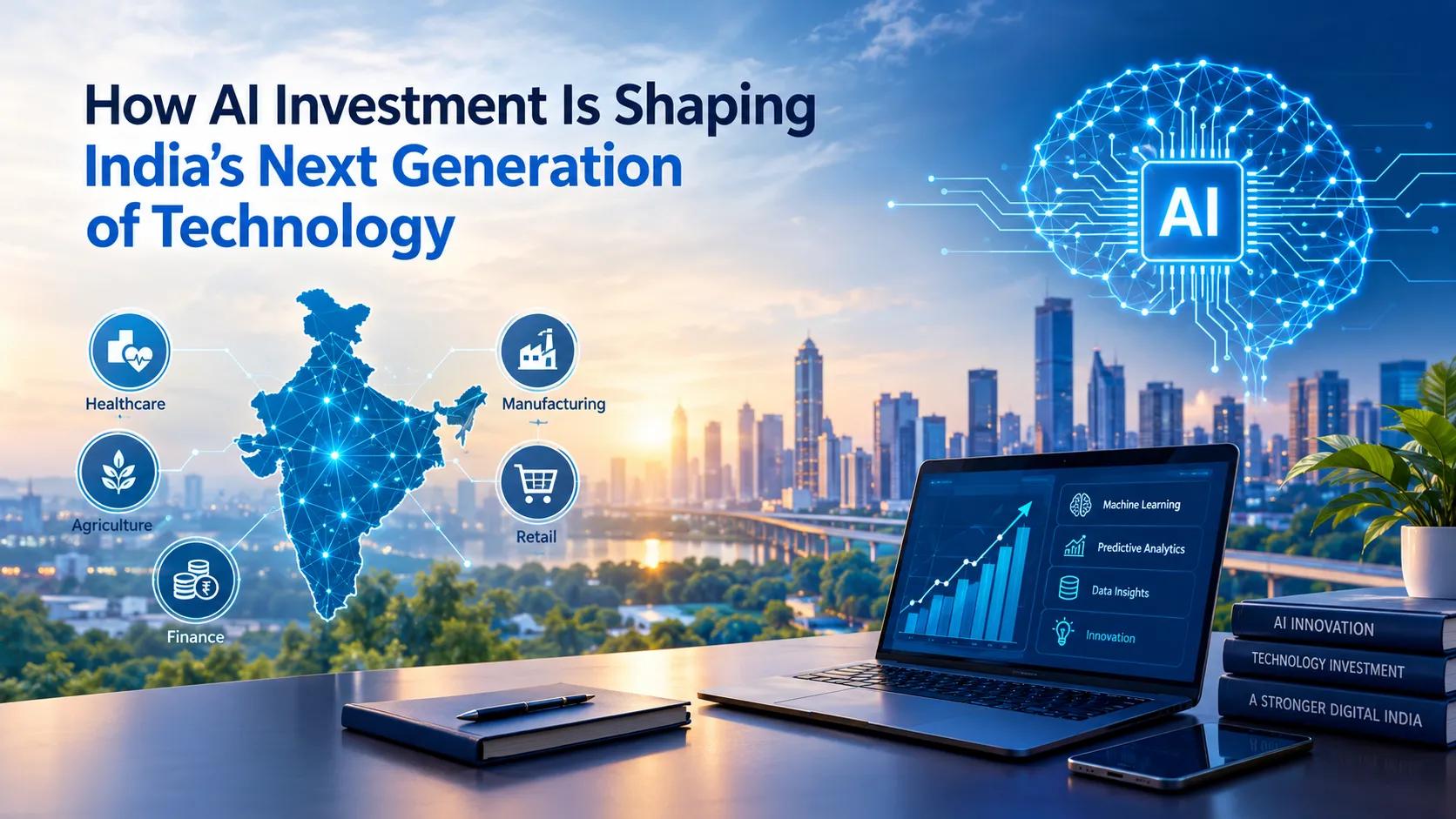
For Indian businesses, the potential applications are broad. Financial services companies can use AI to identify unusual transaction patterns. Healthcare organisations can investigate AI-assisted analysis of medical information. Manufacturers can use data-based systems to monitor performance, while agricultural businesses can explore tools that help analyse crop conditions and resource requirements.
These applications illustrate why AI has become an important area of technology development. The opportunity is not simply to introduce new software but to create systems that solve clearly defined problems and deliver measurable value.
Why AI Investment Matters for Emerging Businesses
Developing an AI product involves more than building an algorithm. A startup may need access to high-quality datasets, experienced engineers, computing resources, testing environments, and customers willing to evaluate its solution.
These requirements can create financial and operational challenges, particularly for early-stage companies. Investment can help businesses recruit technical talent, improve their products, validate their technology, and move from early experiments toward commercial applications.
The professional profile of Rajat Khare connects his work with Boundary Holding to emerging technology sectors, including artificial intelligence and data analytics. This provides a relevant context for understanding how technology-focused investment can support companies developing advanced digital solutions.
AI investment also requires careful evaluation. Investors need to understand the problem a startup is trying to solve, the quality of its technology, the competitive landscape, and the potential demand for its product. A promising demonstration does not automatically translate into a sustainable business.
The strongest opportunities are often those where a company can explain how its AI system improves an existing process, serves a clear customer need, or enables a capability that was previously difficult to achieve.
Machine Learning and the Value of Data
Machine learning is one of the main approaches used to develop many modern AI applications. It allows systems to identify patterns in data and use those patterns to make predictions or classifications. For example, a business might use historical sales information to forecast demand. A financial organisation might analyse transaction patterns to flag potentially suspicious activity. An industrial company could examine equipment data to identify changes that may indicate a developing maintenance issue.
The quality of these applications depends heavily on the information used to train and evaluate the models. Incomplete, inaccurate, outdated, or unrepresentative data can reduce the reliability of a system.
For startups, building a useful machine-learning product therefore requires both technical capability and a practical understanding of the data environment. Developers must consider how information is collected, whether it is suitable for the intended purpose, and how the model performs under real-world conditions.
Predictive Analytics and Better Decision-Making
Predictive analytics uses data, statistical techniques, and computational models to estimate likely future outcomes. AI and machine learning can strengthen these capabilities when suitable data and methods are available.
Businesses may use predictive systems to estimate customer demand, anticipate maintenance needs, identify operational risks, or understand changing market conditions. These insights can help decision-makers evaluate different possibilities before taking action.
For Indian startups, predictive analytics creates opportunities to develop specialised tools for industries with complex information needs. A logistics company may want better demand forecasts, while a healthcare organisation may investigate systems that support risk assessment. Agricultural businesses could explore models that analyse weather, soil, or crop-related information.
Successful AI products must communicate uncertainty appropriately and allow users to understand the limitations of their results. This combination of technical performance and practical reliability is essential when predictive analytics is used to support important decisions.
AI Applications Across Indian Industries
AI is not restricted to a single sector. Its applications are developing across healthcare, agriculture, finance, energy, retail, and other fields where organisations need to analyse information or improve existing processes.
In healthcare, AI-assisted tools may help professionals examine medical information or support selected diagnostic workflows. These systems require careful validation and appropriate clinical oversight.
In agriculture, data-driven applications can help analyse crop conditions, estimate resource requirements, and support planning. In financial services, AI can assist with fraud detection, risk analysis, and customer-service processes. Retail businesses may use it to study demand patterns and improve inventory planning.
BusinessCloud has reported on the use of AI to address differences in cardiovascular disease symptoms and the challenges those differences can create for diagnosis. The subject illustrates how AI development can intersect with a specific problem in healthcare rather than functioning as a general-purpose technology alone.
For startups, identifying a clear application can help establish a stronger business proposition. Instead of presenting AI as the product's only selling point, a company can explain the customer problem, the process being improved, and the evidence supporting its solution.
Supporting AI-Driven Startups in India
AI-driven startups often need to balance research and product development with the commercial demands of running a business. Technical teams must improve their models, but they also need to understand customers, establish pricing, maintain reliable systems, and demonstrate the value of their products.
This creates a role for investment that is informed by both technology and business development. Funding may support recruitment, computing infrastructure, product testing, partnerships, and expansion into additional markets.
Boundary Holding's public profile identifies artificial intelligence, data analytics, machine learning, and predictive analytics among its technology interests. Its broader investment activity provides a context for discussing how investors engage with companies developing specialised technology.
For Indian founders, access to capital can be particularly valuable when development costs arise before a product generates substantial revenue. Nevertheless, funding alone cannot guarantee success. Startups also need capable teams, responsible data practices, clear customer demand, and a realistic path toward sustainable operations.
Responsible AI and the Importance of Trust
As AI applications become more widely used, responsible development becomes increasingly important. AI systems can produce inaccurate results, reflect biases in their training data, or perform poorly when applied to situations different from those for which they were developed.
Businesses must consider privacy, data security, transparency, and accountability when designing and deploying AI products. They should also assess whether human review is necessary, particularly in applications involving healthcare, finance, employment, or other consequential decisions.
For startups, responsible AI practices are not simply technical safeguards. They can influence customer confidence, regulatory readiness, and the long-term reputation of a business.
Investors evaluating AI ventures can also consider how a company tests its systems, handles sensitive information, monitors performance, and communicates limitations. These questions help distinguish a compelling demonstration from a product that is prepared for practical use.
The Future of AI Innovation in India
India has opportunities to develop AI solutions for domestic requirements while building products that can serve international markets. Its technology talent, entrepreneurial activity, and growing digital economy provide a foundation for experimentation and business creation.
Realising this potential will require collaboration among researchers, engineers, founders, investors, customers, and public institutions. Research can generate new methods, startups can turn them into products, and investment can provide resources for testing and commercial expansion.
The association between Rajat Khare AI and Boundary Holding's technology investment interests fits within this broader discussion about the relationship between AI development and business growth. The important question for emerging companies is how effectively they can turn technical capabilities into useful, dependable solutions.
Conclusion
Artificial intelligence is opening new possibilities for India's technology ecosystem, from machine learning and predictive analytics to specialised applications across healthcare, finance, agriculture, and business operations. Yet turning these possibilities into successful products requires more than technical experimentation.
Startups need skilled teams, relevant data, commercial understanding, appropriate investment, and responsible development practices. Investors, in turn, must evaluate both the potential of the technology and the business's ability to deliver practical results.
Rajat Khare's association with Boundary Holding provides a context for discussing technology-focused investment and the development of emerging technology companies. As India's AI ecosystem continues to evolve, the most meaningful progress will come from connecting research, investment, and entrepreneurship with solutions that address genuine needs.
Reference Link- https://businesscloud.co.uk/news/ai-can-now-address-misdiagnosis-of-heart-diseases-surpassing-differences-in-gender-based-symptoms/